We Guard.We Protect.We Secure.
Phoenix's trusted watch — professional unarmed officers and NFPA-compliant fire watch, on-site typically within 60 minutes, day or night.

Act II — Anatomy of Vigilance
Every detail engineered to deter.
The Arsenal
Run the scan. See what guards the perimeter.
Move your cursor across the field kit — surveillance optics, dispatch radios, armored patrol units, perimeter floodlights. Everything we deploy, revealed under the night-vision lens.
Act III — The Human Shield
Discipline you can wear on a badge.
Trained, Certified Officers
Every officer is screened, licensed and certified, with continuous general and site-specific training.
Unannounced Spot Checks
High professional standards enforced through regular unannounced field inspections.
24/7 Emergency Dispatch
Backup call center and standby trained officers — response typically within 60 minutes.
Custom Solutions
Risk assessments and tailored coverage, from corporate attire to formal uniforms.

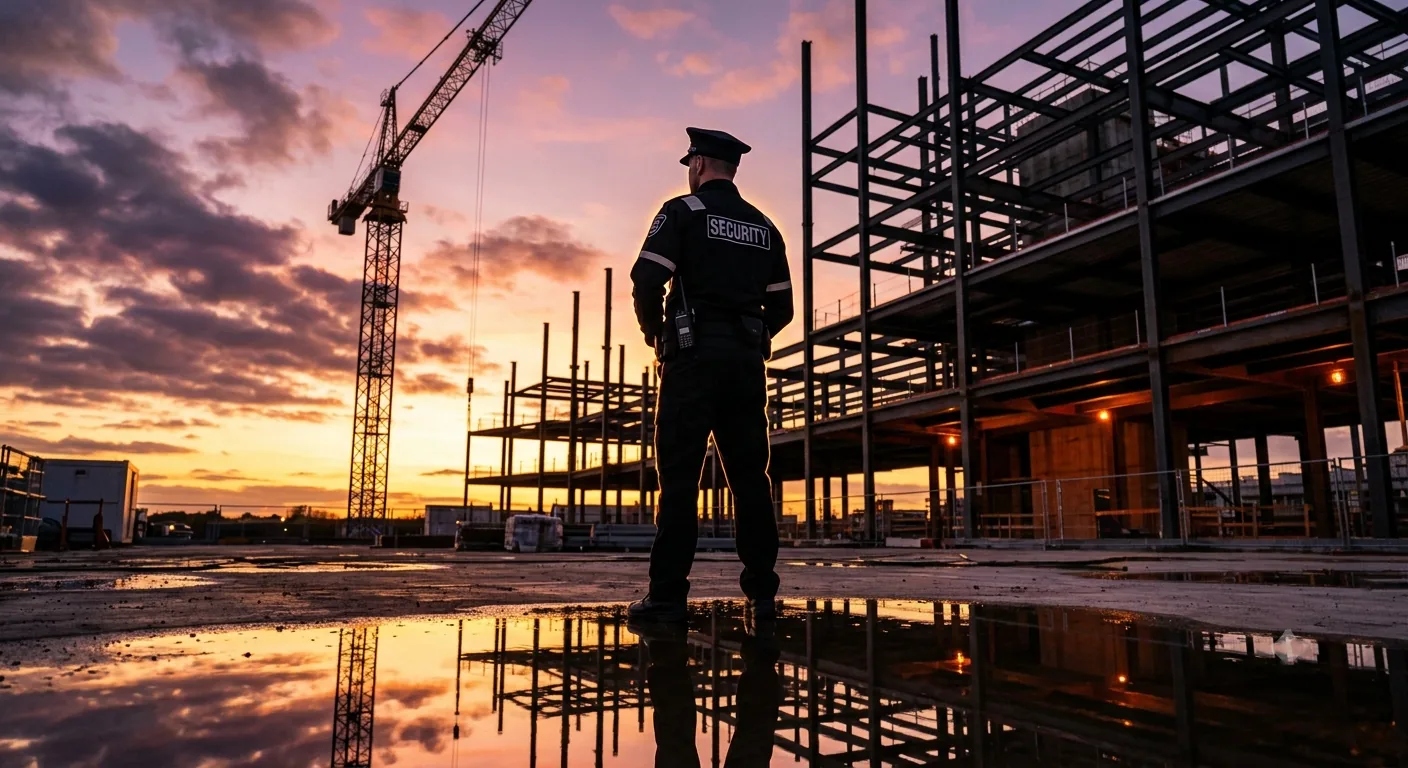

Act IV — Every Perimeter
From first light on the job site…
…to the last hour of the night
The watch never breaks.
24+ Sectors
Protection, tailored to your industry.
On The Record
Trusted where it counts.
“We lost thousands in copper and tools before AZ Gold. Since their officers and trailer went up, our site has been clean for eleven straight months.”
Before You Call
Questions, answered straight.
Dispatch runs 24/7 with management on call and standby trained officers. For most of the Phoenix metro our response time is 60 minutes or less — for emergency fire watch it is usually far quicker.
Act V — Through the Night
Fire Watch, By The Book.
Per NFPA regulations, fire watch is mandatory when fire alarm systems are impaired for more than 4 hours in a 24-hour period, or water-based systems are down for over 10 hours.
Every 15 minutes
Occupied facilities
Sleeping areas, institutional or assembly occupancies.
Every 30 minutes
Vacant facilities
Logged in the fire watch book as mandated by fire marshals.
- Patrolling and monitoring fire-prone areas
- Written patrol records in fire log books every half hour
- Hazard identification and reporting to management
- Alerting the Fire Department and building occupants